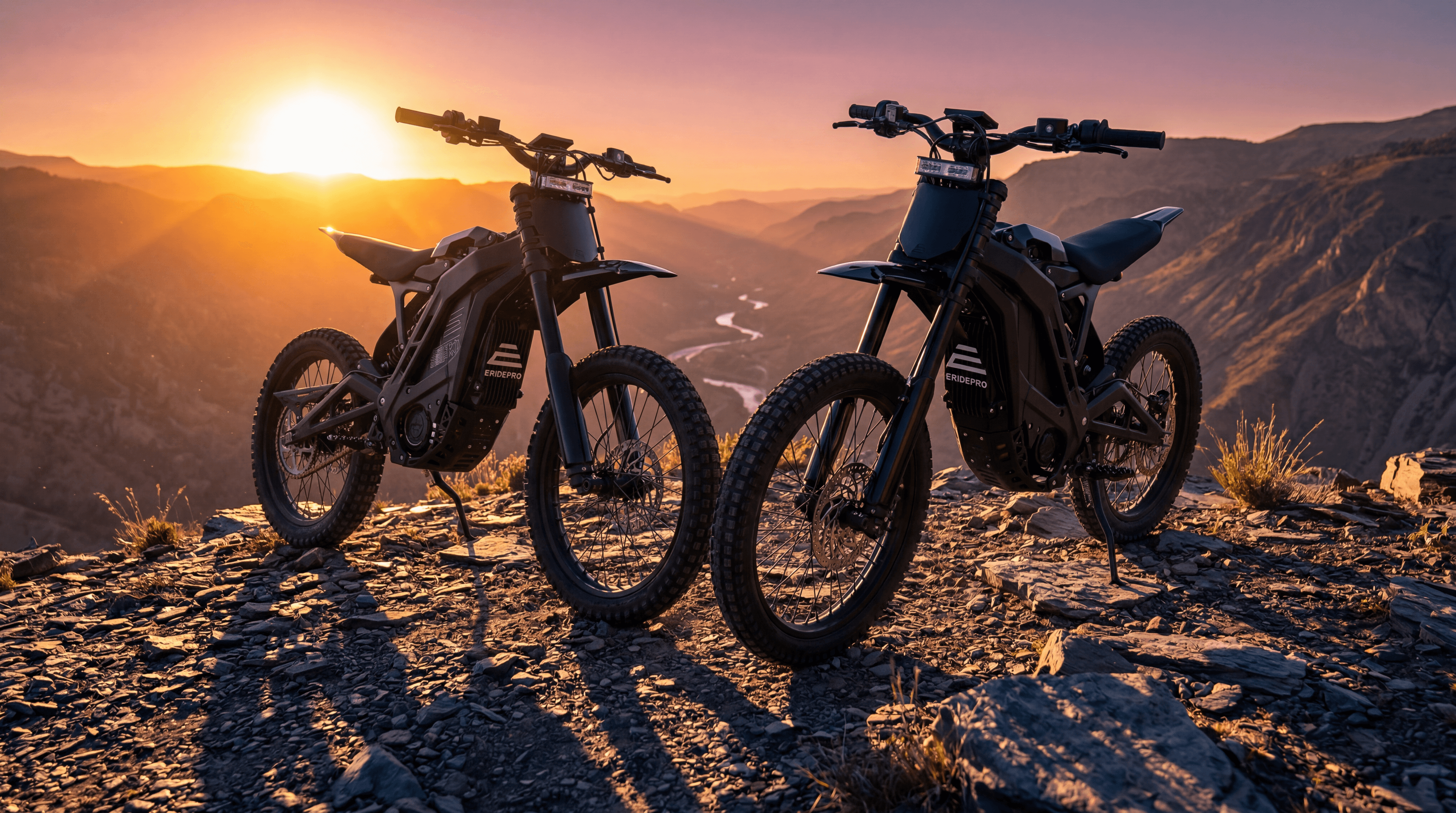
E Ride Pro SS 3.0 VS E Ride Pro SR
Quick Verdict
The Rundown
The SS 3.0 delivers 15.8kW of peak power and up to 100 miles of range for $4,999 — the best value in the Send Bikes lineup. The SR pushes to 25kW and 70 mph for riders who want maximum performance. Both ship from the same shop with the same warranty.
Why Choose
E Ride Pro SS 3.0
Riders who want elite range and strong performance while staying at a lower purchase price.
- $700 lower purchase price
- Up to 100 miles of range per charge
- 15.8kW peak power at 62 mph
- 17 lbs lighter than SR
- Same belt drive and warranty coverage
Why Choose
E Ride Pro SR
Riders who want the highest top speed and peak power in the Send Bikes lineup.
- 25kW peak power — 58% more than SS 3.0
- 70 mph top speed vs 62 mph
- Samsung 50S premium battery cells
- 1.8s 0-30 mph acceleration
- Flagship-level performance under $6K
Head to Head
Spec-by-Spec Comparison
| Spec | E Ride Pro SS 3.0 | E Ride Pro SR |
|---|---|---|
| Price | $4,999 | $5,699 |
| Top Speed | 62 mph | 70 mph |
| Peak Power | 15.8 kW | 25 kW |
| Range | 64–100 mi | 62–93 mi |
| Weight | 167 lbs | 183 lbs |
| Battery | 3600 Wh | 3600 Wh |
| Charge Time | 3.5 hrs (20-90%) | 3.5 hrs (20-90%) |
| Drivetrain | Belt Drive | Belt Drive |
Price
E Ride Pro SS 3.0
$4,999
E Ride Pro SR
$5,699
Top Speed
E Ride Pro SS 3.0
62 mph
E Ride Pro SR
70 mph
Peak Power
E Ride Pro SS 3.0
15.8 kW
E Ride Pro SR
25 kW
Range
E Ride Pro SS 3.0
64–100 mi
E Ride Pro SR
62–93 mi
Weight
E Ride Pro SS 3.0
167 lbs
E Ride Pro SR
183 lbs
Battery
E Ride Pro SS 3.0
3600 Wh
E Ride Pro SR
3600 Wh
Charge Time
E Ride Pro SS 3.0
3.5 hrs (20-90%)
E Ride Pro SR
3.5 hrs (20-90%)
Drivetrain
E Ride Pro SS 3.0
Belt Drive
E Ride Pro SR
Belt Drive
Deep Dive
Key Differences
Power & Speed
E Ride Pro SS 3.0
15.8kW peak — strong for the price
E Ride Pro SR
25kW peak — 58% more power, 70 mph top speed
The SR is the clear power leader with 25kW peak output and an 8 mph top speed advantage. For aggressive trail riding and open terrain, the SR pulls harder in every scenario. The SS 3.0 still delivers serious acceleration — 15.8kW is more than double most competitors — but the SR is in a different class.
Range & Battery
E Ride Pro SS 3.0
64-100 miles on 3600Wh battery
E Ride Pro SR
62-93 miles on Samsung 50S cells
Both bikes run 72V 50Ah packs with 3600Wh capacity, but the SS 3.0 edges out the SR on range thanks to its lower power draw. The SR uses premium Samsung 50S cells for better long-term cycle life. For riders who prioritize distance per charge, the SS 3.0 stretches further.
Weight & Build
E Ride Pro SS 3.0
167 lbs — lighter and easier to manage
E Ride Pro SR
183 lbs — heavier but built for high output
The SS 3.0 is 16 pounds lighter, which makes a real difference when loading into a truck bed or navigating tight trails. Both bikes share belt drive and FASTACE adjustable suspension. The SR carries extra weight to support its higher power output.
Value & Support
E Ride Pro SS 3.0
$4,999 — best performance-per-dollar in lineup
E Ride Pro SR
$5,699 — flagship specs for under $6K
The SS 3.0 wins on pure value: you get 2.6x the power of a Sur-Ron for $500 more. The SR wins on peak performance: no other bike under $10K matches its power output. Both include the same Send Bikes warranty, dealer support, and financing options. The right choice depends on whether you prioritize value or top-end capability.
The Bottom Line
Our Verdict: It Depends
Two different bikes for two different priorities. Neither is objectively better — it depends on what you value most.
E Ride Pro SS 3.0
Get the SS 3.0 if you want the best range-to-dollar ratio, lighter weight for easier handling, and still want power that embarrasses the competition.
E Ride Pro SR
Get the SR if top speed, peak power, and premium cells are worth $700 more to you. It's the fastest e-moto under $10K.
Service & Warranty
Both models include factory warranty and dealer-backed support through Send Bikes / Central Georgia Powersports.
Financing & Ownership
Monthly payment differences are mostly driven by purchase price. Use financing to model monthly budget, then compare total out-of-pocket over 12-36 months.